All Categories
Featured
Table of Contents
Notes: GDP growth is specified as the yearly modification in genuine (inflation-adjusted) GDP in the forecast year compared to the previous year. Joblessness rate is since December for each year. Core inflation is the year-over-year modification in the Customer Prices Index, excluding unstable food, energy, alcohol, and tobacco costs, based upon the fourth-quarter average for each year.
Yael Selfin, Vice Chair and Chief Economist, KPMG in the UK, was signed up with by David Smith, Economics Editor at the Sunday Times and Chris Hearld, Group Managing Partner, KPMG, to check out how families and services might be affected and the difficulty for the brand-new federal government of delivering growth while handling public financial resources.
The world economy grew by 3.3 per cent last year, nearly similar to the rates recorded in 2023 and 2024. US development slowed from 2.8 per cent in 2024 to 2.2 per cent in 2025, as tariffs, tighter immigration policy and elevated uncertainty weighed on demand.
New UK Capital Trends Supporting Mid-Market Enterprises
Growth in advanced economies is set to slow to 1.8 per cent in 2026 (US 2.3 per cent, Euro Location 1.3 per cent, Japan 0.8 per cent), with emerging markets growing by 4.0 per cent (China 4.6 per cent, India 6.5 per cent). United States CPI inflation (2.7 per cent in December 2025) is expected to average 2.6 per cent in 2026, reflecting tariff pass-through and a weaker dollar.
Comparing Digital and Legacy Management Practices
The ECB has held its policy rate at 2 percent and is likely to maintain this position. Long-term bond yields remain elevated, with United States 10-year Treasuries around 4.3 per cent and Japanese 10-year federal government bond yields rising sharply to around 2.3 per cent, up from 0.3 per cent in 2023. Tariff effects are still resolving, while US actions in Venezuela, tensions over Greenland, and China's export controls on vital minerals raise the risks of additional disruption.
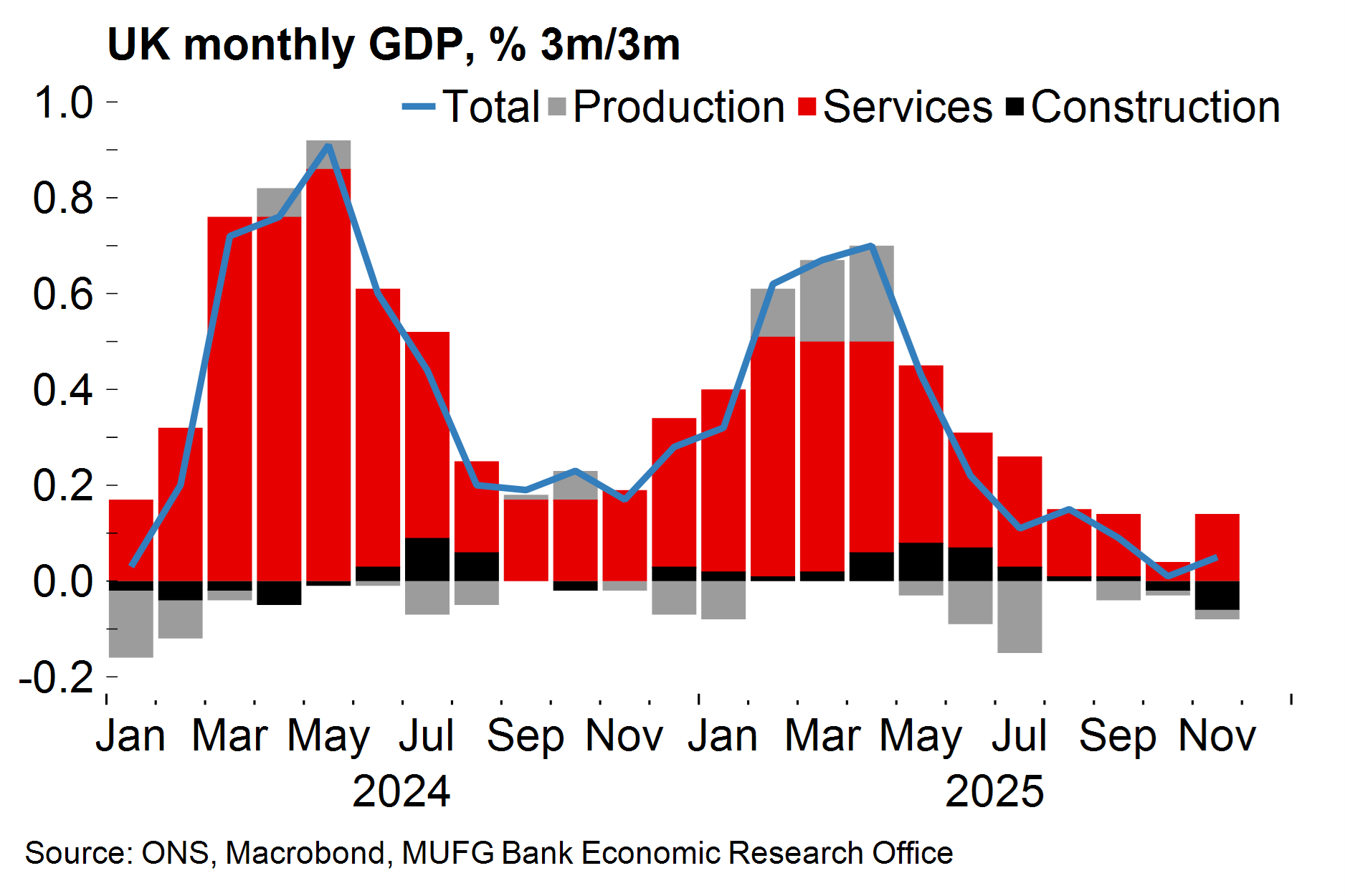
GDP grew by 0.7 per cent in Q1 as businesses advanced activity ahead of the April increases in company National Insurance Contributions and the National Living Wage. Development then slowed to 0.2 percent in Q2 and 0.1 percent in Q3, held back by Budget-related uncertainty and a cyber-attack affecting Jaguar Land Rover.
The near-term outlook is supported by recurring financial expansion and stable consumption development. Beyond 2027, development needs to settle slightly above pattern at around 1.3-1.4 per cent. Given current population forecasts, this indicates per capita GDP development staying listed below 1 per cent from 2027 onwards, underscoring the UK's persistent productivity challenge.
Driving the British Enterprise Expansion for 2026
Our main forecast is for CPI inflation to average 2.3 per cent in 2026 and to settle around target thereafter. Services inflation (at 4.5 per cent in December) and core inflation (3.2 per cent in December) stay uncomfortably elevated, pointing to persistent hidden rate pressure.
Average revenues development was 4.7 percent in the three months to November 2025. We forecast this to slow to around 3.6 per cent in 2026 and 3.1 per cent in 2027 as rising unemployment minimizes employees' bargaining power a moderation necessary for inflation to remain at target on a continual basis.
This shows remaining uncertainty about the outlook and the scars from the recent inflation shock. We anticipate this elevated cost savings ratio to persist, constraining usage development to around 1.0 percent in 2026 and 1.3 per cent in 2027. With inflation falling and unemployment rising, we expect 2 further 25 basis point cuts in 2026, bringing the rate to 3.25 per cent by year-endour price quote of the long-run neutral rate.
Mastering the British Enterprise Growth in 2026
On our forecast, the existing spending plan is close to balance by 202930, suggesting no reliable headroomBox C examines differences between the OBR's forecast and ours. Public financial obligation continues to increase, with the debt-to-GDP ratio approaching 100 per cent by decade-end, restricting the scope for discretionary financial assistance in future shocks.
Will AI Tools Scale Mid-Market Growth?By contrast, positive net migration supports fiscal sustainability by broadening the working-age population and expanding the tax base. Boosts in company National Insurance coverage Contributions, considerable upratings of the National Living Wage (NLW), and reforms to work rights have raised the marginal expense of hiring by around 7 percent in real terms for an entry level position.

Latest Posts
Analyzing the 2026 British Economic Outlook and Growth
Top Enterprise Management Tips for UK Firms
Future Expansion Tips for British Firms